
3D filament is the raw material most home 3D printers use: a long, thin thread of plastic, wound on a spool like fishing line, that the printer melts and lays down layer by layer to build an object. If you have seen a desktop 3D printer at work, the spool feeding into the top is the filament, and the finished object is simply that same plastic, re-formed. Choosing the right filament matters more than most beginners expect, because each material behaves differently — some print easily but stay weak, others are strong but demand a hotter, enclosed printer. For a first spool, the answer is almost always PLA, and this guide explains why, plus when to move beyond it.
TL;DR / Key Takeaways
- Filament is plastic thread (usually 1.75 mm) that a printer melts and deposits layer by layer.
- PLA is the best beginner filament: easy to print, low warping, no enclosure needed.
- ABS is stronger and heat-resistant but warps and needs ventilation and an enclosure.
- PETG sits between PLA and ABS: stronger than PLA, easier than ABS.
- Match the material to the job — a decorative model and a functional bracket need different plastics.
How Does Filament Printing Work?
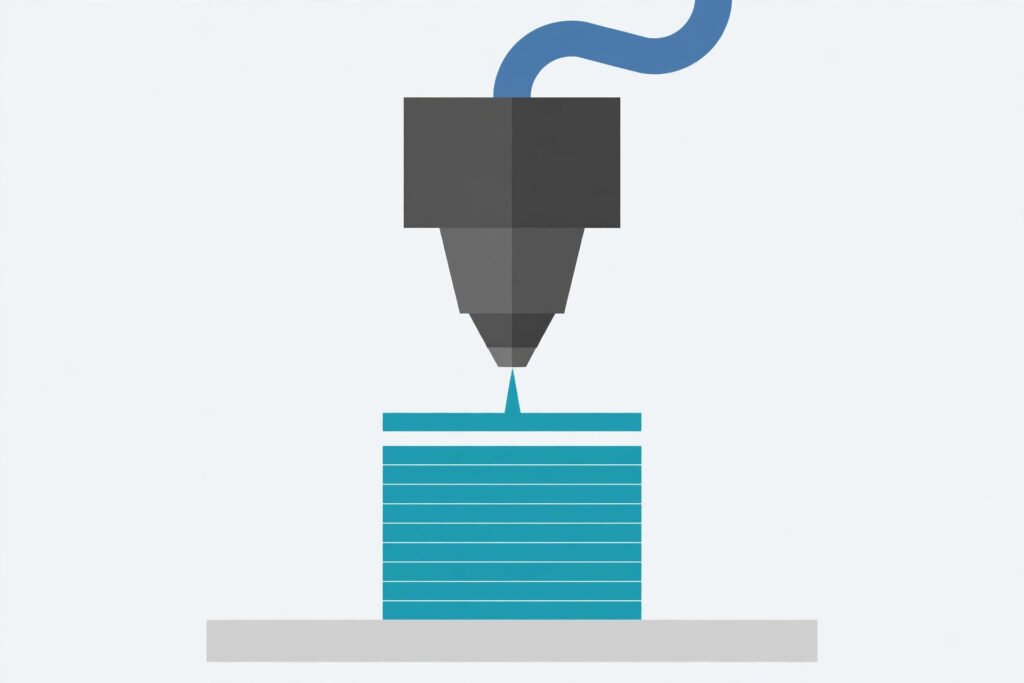
The process is called fused deposition modelling, or FDM. The printer feeds filament from the spool into a heated nozzle, typically between 180 and 260 degrees Celsius depending on the material. The nozzle melts the plastic and extrudes it in thin lines, building the object one horizontal layer at a time. Each new layer bonds to the one below as it cools, and after dozens or hundreds of layers, the object is complete.
Two details shape everything else. First, filament diameter must match your printer — almost all modern home printers use 1.75 mm, while some older or larger machines use 2.85 mm, and the two are not interchangeable. Second, every material has a temperature window: too cold and layers do not bond, leaving a weak, delaminating print; too hot and the plastic strings, blobs, or burns. Slicer software holds recommended temperatures for common materials, so beginners rarely need to guess.
What Are the Main Filament Types?
| Material | Ease of printing | Strength | Heat resistance | Best for |
|---|---|---|---|---|
| PLA | Easiest | Low–medium | Low (softens in a hot car) | Decorative models, prototypes, first prints |
| PETG | Easy–medium | Medium–high | Medium | Functional parts, outdoor use, containers |
| ABS | Harder | High | High | Tough parts, car interiors, enclosures |
| TPU | Medium | Flexible | Medium | Phone cases, gaskets, flexible parts |
| ASA | Harder | High | High, UV-resistant | Outdoor parts that face sun |
| Nylon | Hard | Very high | High | Gears, tools, parts under load |
PLA (polylactic acid) is made from plant starches and is the default beginner material. It prints at lower temperatures, sticks well to the bed, barely warps, and comes in the widest range of colours. Its weaknesses are real: it is brittle under impact and softens at modest heat, so a PLA part left in a sunny car can deform. For display models, desk toys, and prototypes, those limits rarely matter.
PETG (polyethylene terephthalate glycol) is the sensible second spool. It is stronger and more flexible than PLA, resists moisture and weather better, and handles warmer conditions. It is slightly stringier and stickier during printing, so it needs a little tuning, but most printers handle it without an enclosure.
ABS (acrylonitrile butadiene styrene) is the tough, heat-resistant plastic used in many manufactured goods. It prints hotter, shrinks as it cools — which causes warping and layer splitting on open printers — and releases fumes that need ventilation. An enclosure and a heated bed are effectively required. Choose ABS when a part must survive heat or impact, not for a first project.
TPU (thermoplastic polyurethane) is flexible, like a rubber band. It prints slowly and needs a direct-drive extruder on many machines, but it is the only choice for anything that must bend: phone cases, seals, and vibration mounts. ASA is essentially weatherproof ABS, good for outdoor parts. Nylon is exceptionally strong but absorbs moisture from the air, so it must be stored dry and printed hot — a material for experienced users with specific needs.
Which Filament Is Best for Beginners?
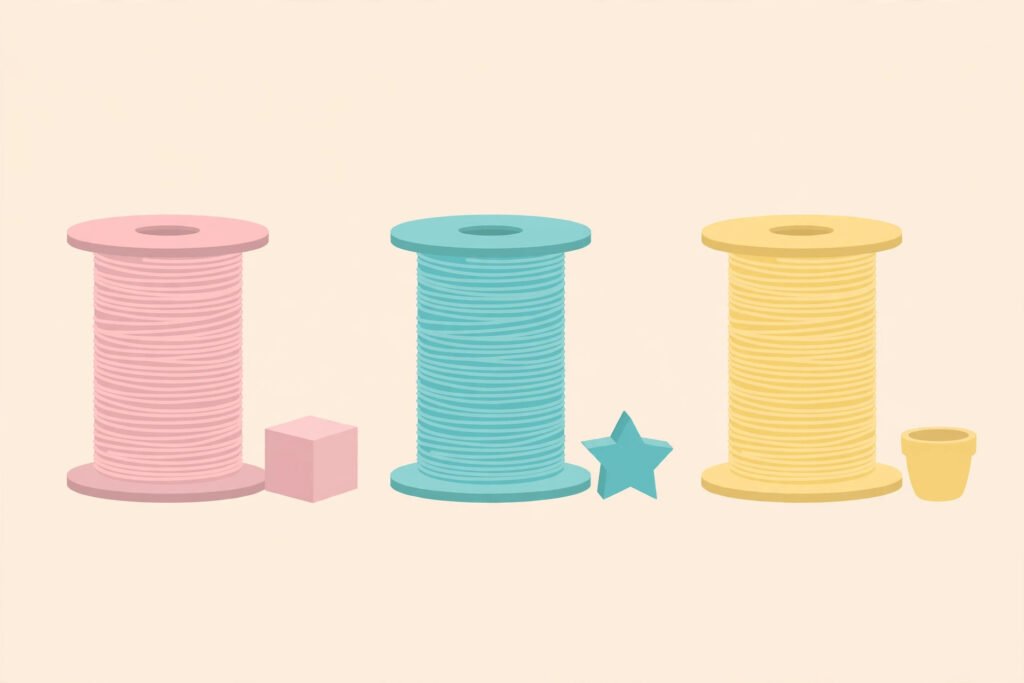
PLA, without hesitation, for your first several spools. It forgives the mistakes every beginner makes: slightly wrong temperatures, an unlevel bed, a draughty room. Prints succeed often enough that you learn the machine instead of fighting the material. Once you can print PLA reliably, PETG is the natural next step for parts that need to be stronger or live outdoors.
A common beginner mistake is buying an exotic filament first — carbon-fibre, wood-filled, or glow-in-the-dark — because it sounds exciting. Filled filaments are abrasive and wear out standard brass nozzles, and they need tuning that assumes experience. Start plain, learn the basics, then experiment.
How Do I Store Filament?
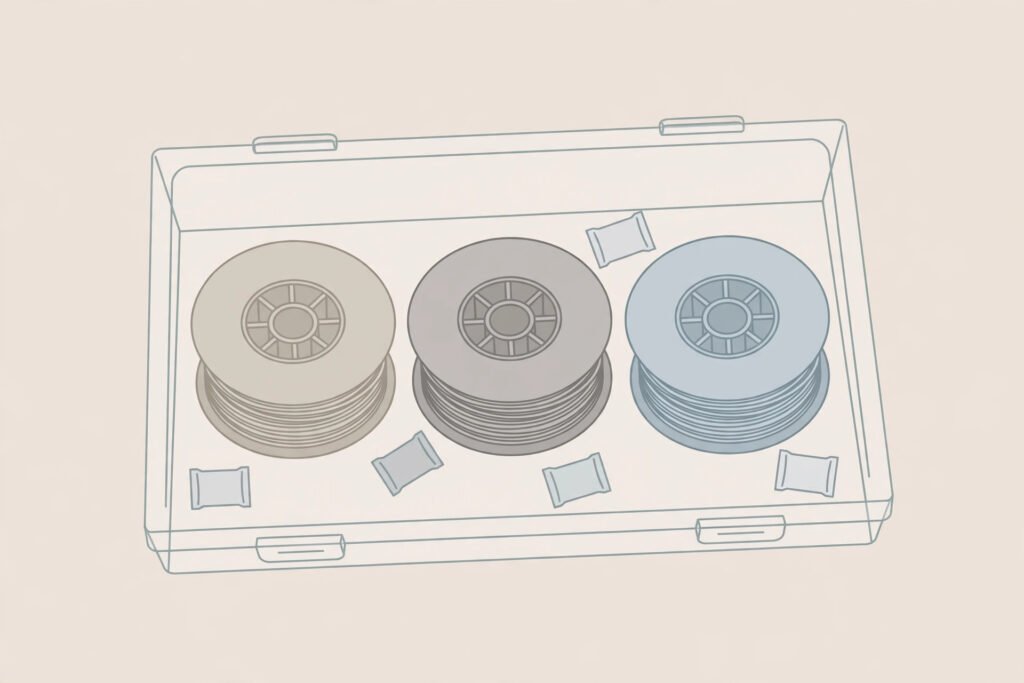
Filament absorbs moisture from the air, and wet filament prints badly: it pops and hisses at the nozzle, leaves a rough surface, and bonds weakly. The fix is simple storage. Keep spools in sealed bags or boxes with desiccant packets, and reseal a spool as soon as a print finishes rather than leaving it on the printer for weeks. Nylon and TPU are the thirstiest materials and suffer fastest; PLA and ABS are more forgiving but still degrade over time in humidity. If a spool starts printing rough and bubbly after months on a shelf, drying it in a filament dryer or a low oven (following the manufacturer’s guidance) usually restores it.
Checklist: Choosing Your Filament
- First prints or decorative models? Choose PLA.
- Need strength, weather resistance, or a functional part? Choose PETG.
- Need heat resistance or toughness, with an enclosed printer? Choose ABS.
- Need flexibility? Choose TPU.
- Check the diameter matches your printer (usually 1.75 mm).
- Store opened spools sealed with desiccant, not left out in humid air.
The guide to JPG vs PNG covers a similar materials decision for images — picking the right format for the job — and the guide to what is CSS explains how a different kind of material, website styling, is chosen and applied.
Summary
3D filament is the plastic thread a printer melts into objects, and the material you choose decides whether a print is easy, strong, heatproof, or flexible. PLA is the beginner’s best friend: easy, forgiving, and good for most first projects. PETG adds strength and weather resistance for functional parts, ABS brings toughness and heat resistance at the cost of a harder print, and TPU covers everything flexible. Match the material to the part, store spools dry, and resist the exotic filaments until the basics are second nature.
Frequently Asked Questions
What is 3D filament made of?
Most 3D filament is plastic thread, usually PLA (plant-starch based), PETG, ABS, or TPU. The printer melts it and deposits it layer by layer to build an object. Specialty filaments add fillers like wood fibre or carbon fibre to a plastic base.
Which filament is best for beginners?
PLA. It prints at lower temperatures, sticks well, barely warps, and needs no enclosure or ventilation precautions. It is the most forgiving material while you learn your printer.
PLA vs ABS: which should I choose?
Choose PLA for easy printing, decorative models, and prototypes. Choose ABS when a part must be strong and heat-resistant, and you have an enclosed printer with ventilation, since ABS warps more and releases fumes while printing.
How long does filament last?
Unopened and sealed, filament lasts a long time. Once opened, it absorbs moisture from the air, which degrades print quality over weeks to months depending on humidity. Sealed storage with desiccant keeps it usable far longer.
Can I use any filament in any printer?
No. The filament diameter must match your printer (usually 1.75 mm), and the material must suit your printer’s temperature range and setup. Flexible and high-temperature materials need specific hardware, such as a direct-drive extruder or an enclosure.